
How To Fix Slow Internet Malaysia (UNIFI, Maxis & TIME Fiber Guide 2026)
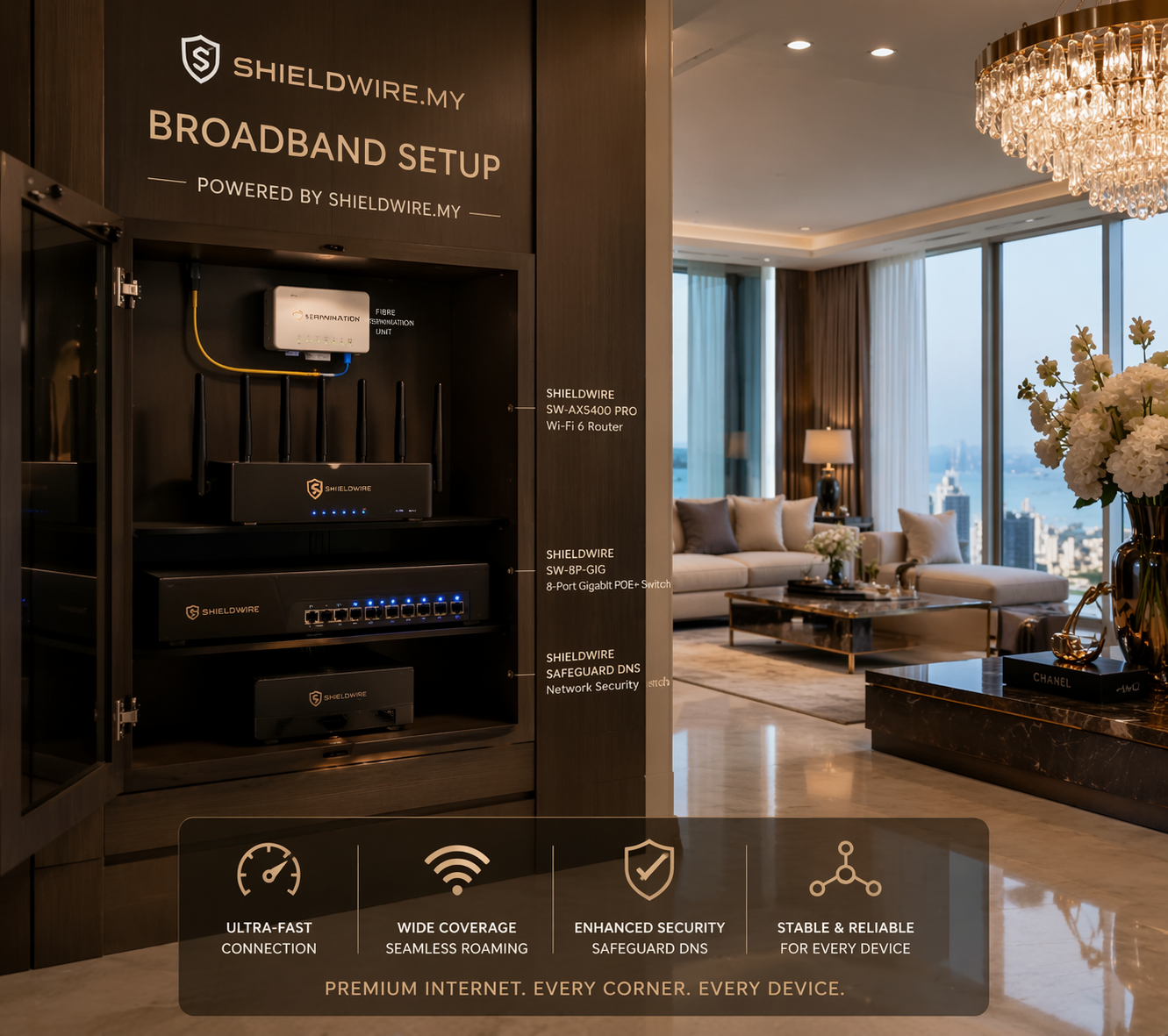
Slow internet is one of the most common frustrations faced by Malaysian broadband users, especially those on Unifi, Maxis Fiber, and TIME Fiber. Even with high-speed plans like 300Mbps, 500Mbps, or even 2Gbps, many users still experience lag, buffering, or unstable connections—especially during peak hours.
The good news? In most cases, the issue is not your internet plan, but your home network setup.
In this guide, we’ll show you how to fix slow internet in Malaysia using smarter networking hardware, better DNS management, and upgraded router technology.
1. Your ISP Is Not Always the Problem
Whether you're using:-
- UNIFI Fiber (TM)
- Maxis Home Fiber
- TIME Fiber Internet
All three providers already offer strong backbone infrastructure. For example, Unifi and Maxis now support up to 2Gbps plans in selected areas.
However, most users still rely on basic ISP routers, which often become the bottleneck.
Common issues include:-
- Weak WiFi coverage in larger homes
- High ping during gaming
- Slow DNS resolution
- Congestion when multiple devices are connected
2. Upgrade to a High-Performance Router
One of the fastest ways to fix slow internet in Malaysia is upgrading your router.
At Shield Wire, we recommend premium networking hardware designed specifically for Malaysian fibre networks.
Recommended: Shield Wire Premium Router Model X-01
This router is built for:-
- Heavy household usage (10–30 devices)
- 4K streaming and smart homes
- Stable performance under ISP congestion
- Up to 2Gbps-ready hardware support
It is ideal for UNIFI, Maxis, and TIME users who want stable whole-home coverage.
Recommended: Shield Wire Performance Gaming Router Model Y-01
Designed for gamers and latency-sensitive users:-
- Ultra-low ping optimization
- Prioritized gaming traffic (QoS)
- Strong WiFi stability for FPS & MOBA games
- 2Gbps-capable throughput design
If you experience lag spikes in games, this router can significantly improve performance.
3. Use Dual Private DNS Servers (Huge Performance Boost)
Most Malaysians still use default ISP DNS, which can slow down browsing and app loading.
Shield Wire routers include built-in Dual Private DNS engines, which means:-
- Primary DNS + Secondary DNS failover
- Faster website loading
- Reduced buffering on YouTube/Netflix
- Improved gaming server response
- Better privacy and security
This is especially useful during peak hours when ISP DNS becomes overloaded.
4. Optimize for 2Gbps-Ready Internet
Even if you are currently on 300Mbps or 500Mbps, upgrading to a 2Gbps-ready router prepares your home for future ISP upgrades.
Benefits include:-
- No hardware replacement needed later
- Full speed utilization when upgrading to 1Gbps/2Gbps plans
- Better LAN + WiFi 6/6E performance
- Stable performance for smart homes and CCTV systems
5. Final Thoughts
Slow internet in Malaysia is rarely caused by your ISP alone. In most cases, the real issue is:-
- Weak router hardware
- Poor DNS setup
- WiFi congestion inside the home
By upgrading to a premium router like the Shield Wire X-01 or Y-01, and enabling dual private DNS, you can dramatically improve your UNIFI, Maxis, or TIME Fiber experience without changing your internet plan.
If your internet still feels slow even on high-speed fiber, it’s time to upgrade your home network—not your broadband package.
#Unifi #MaxisFibre #TIMEFiber #SlowInternetFix #MalaysiaInternet
Share this article: